

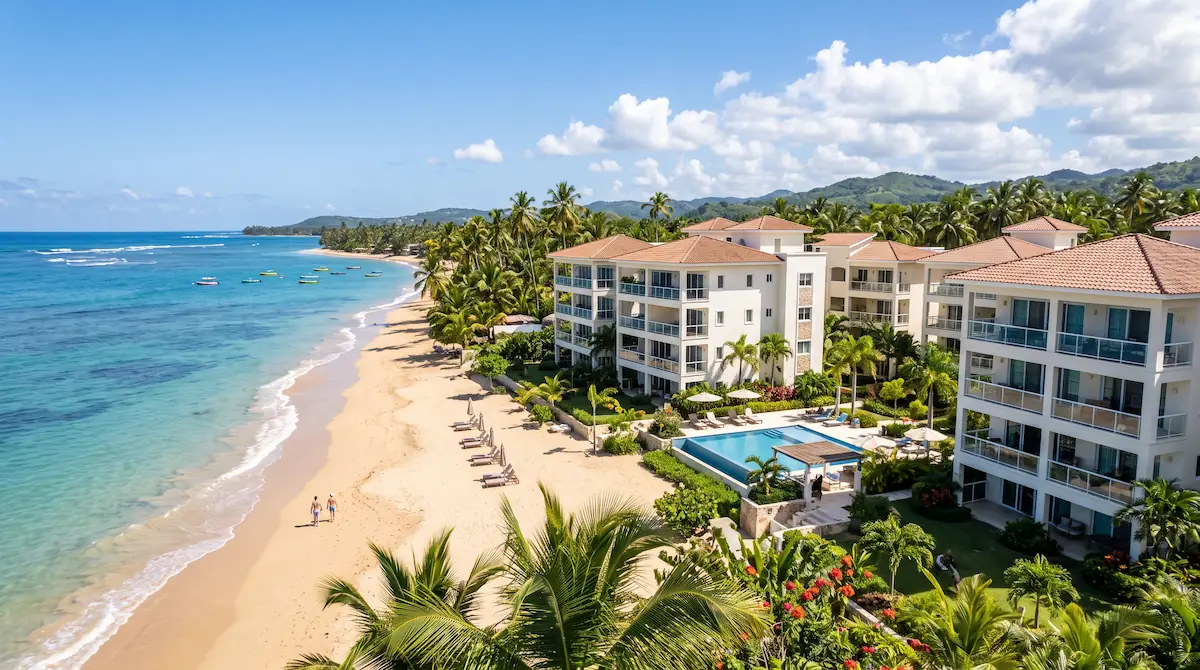
Property Insurance in the Dominican Republic: A Storm Season Guide

Every August the same message arrives from owners who are not on the island. Is my house insured for a hurricane, and what happens if it is not. It is the right question asked at roughly the right time, because the Atlantic season runs from 1 June to 30 November and, according to the National Hurricane Center’s climatology, most activity falls between mid-August and mid-October.
The honest answer usually begins with a correction. Most of what a foreign owner believes about property insurance was learned somewhere else, and Dominican practice is not the same. Below is how cover is actually structured here, where owners get caught, and what the civil protection side of the job looks like. Insurance decides what happens after a storm. Defensa Civil and the COE decide what happens during one. Both halves belong to the same task.
1. A policy written abroad does not cover a house here
Article 6 of Law 146-02 on Insurance and Bonds is short and absolute. Insurance on property in the Dominican Republic has to be placed here, either directly or through a broker, with an insurer authorized to operate in the country. The same article requires the contracts themselves to be approved in advance by the Superintendencia de Seguros, the insurance regulator.
So a homeowners policy from the United States, France or Canada is not a vehicle for insuring a villa in Las Terrenas, whatever an international rider appears to say. The policy has to be a Dominican one, from a company on the regulator’s authorized list. This is worth confirming at purchase rather than at claim time, alongside the other title and status checks in our guide to the legal status of a property.
2. Fire is the policy. Wind is an extension
The standard product here is called incendio y líneas aliadas, fire and allied lines. The base contract insures loss caused directly by fire and lightning. Everything an owner in Samaná is actually worried about sits outside that base.
In the published policy wordings of MAPFRE BHD and Seguros Universal alike, hurricane, cyclone, tornado and manga de viento appear in the exclusions of the base cover. They return only through a separate extension, an ampliación, which has to be contracted and priced. Earthquake, flood and ras de mar, the sea surge, are each their own extension as well. Universal’s Garantivilla lists the same family of perils as named coverages: fire and lightning, explosion, earthquake, cyclone and hurricane, hail, accidental water damage, water damage as a consequence of a cyclone, flood and sea surge, and theft.
One note before the detail. Both companies publish their full policy conditions, and on every point below the two read almost the same, in places word for word. There is a reason for that. The regulator approves these contracts before they can be sold, so companies work from common wording. What follows is therefore normal market practice rather than one company’s fine print. It also means your own policy can differ from it, and yours is the one that counts.
The practical instruction is dull and it matters. Ask for the condiciones particulares, the schedule of your own policy, and read which extensions are actually on it and what sum is insured against each. A policy that says fire and allied lines on the cover page tells you nothing until you have read that schedule.
3. Two things in the wind cover that catch owners out
More than anything else in the contract, these are the two that surprise people.
The first is the rain rule. In both wordings, the extension does not cover damage from hail, water or rain, whether wind driven or not, unless the insured building first suffered actual damage to its roof or walls by the direct force of the wind. Only then does the insurer respond, and only for damage to the interior of the building and the property inside it. Water that simply comes in is not the insured event. Water that comes in through a hole the wind made is.
The second is the exclusion list. Unless you have asked for them to be insured separately, the wind extension does not pay for awnings, blinds, signs or any exterior ornament or fitting. It does not pay for large panes of glass, meaning nine square feet or more, or for fences of any kind, metal chimneys, canopies and tents. A building that is under construction, being rebuilt or being repaired is also outside the cover, unless every exterior door, window and opening is finished and properly shuttered. So is a house roofed in guano, palm thatch or yarey, and so is a house raised off the ground on posts, blocks or stone with open space underneath.
Read that list against a coastal property in Samaná and the relevance is immediate. The palapa over the terrace, the perimeter fence, the elevated beach house, the renovation that is halfway through in September. These are ordinary features here and several of them are outside the extension unless someone asked for them to be inside it.
One exception runs in your favour. Roof tiles, sheeting and glass that were already loose or badly fitted are normally excluded, but that exclusion is lifted when the storm has been officially recorded by the Dominican meteorological service or by the United States weather observatory. A named, recorded storm is treated differently from a windy afternoon.
4. The storm deductible is a share of what you insured, not of the damage
This is the single most misread clause in a Dominican property policy, and it is where owners discover their exposure is larger than they thought.
For earthquake, hurricane, cyclone, tornado, windstorm, flood, sea surge and water damage after a cyclone, both published conditions set the deductible at 2 percent per event of the sum insured for those risks. If your policy insures the house, the contents and other items as separate entries, the 2 percent is worked out separately on each entry. The key point is that the deductible comes off the amount you insured, not off the size of the damage.
An illustration, using round numbers rather than a real file. On a structure insured for $300,000 USD at a 2 percent catastrophe deductible, the first $6,000 USD of a storm loss is yours. That figure does not shrink because the damage was small. A $7,000 USD repair produces a $1,000 USD payment. Many storm losses land below the deductible entirely and are, in practice, uninsured.
Two rules in the same clause soften it. Everything that happens in any 24 hour period counts as a single event, so a storm that batters the coast all day and all night costs you one deductible and not several. And if wind damage, rain damage after the hurricane, and flooding or sea surge all arrive together, you still pay the deductible once rather than once per peril.
What follows from this is a budgeting point rather than an insurance point. You need cash set aside to match the deductible, reachable from abroad, before the season starts. Storm exposure is a holding cost in the same way the annual IPI wealth tax is a holding cost, and it belongs in the same yearly budget.
5. Two dates that decide whether you are covered at all
Forty-eight hours. Under both storm extensions, cover does not start until 48 hours after the company has accepted the risk in writing, whether that arrives as a confirmation, a temporary cover note or the policy itself. The same wait applies if you increase your cover. Once a system is named and heading for Hispaniola it is already too late to buy or raise the cover that would answer for it. This is why insurance is a June conversation and not a September one.
Thirty days. The theft extension for residences ceases, in both wordings, if the residence remains unoccupied for more than 30 consecutive days, unless a watchman is maintained 24 hours a day during that period. For an absentee owner who closes the house in May and returns in December, that is a live problem, and it is one of the reasons a property under active management is treated differently from one that is simply locked. If nobody is there, say so to the insurer and get the position in writing rather than assuming.
6. If you own in a condominio, the master policy is not your policy
A condominio, the Dominican equivalent of a homeowners association, generally holds a building policy. Seguros Universal markets a Condominio product covering apartments and the common areas of the building; MAPFRE BHD markets Multirriesgo Condominio for apartment buildings and condominiums.
What that policy covers, and what it leaves to you, is set out in its own conditions and nowhere else. So ask the administrator for two things: the policy itself and its schedule. Then check three points. Which extensions were contracted, how much is insured against each, and how the deductible is applied.
That third point is the one to ask about directly, because the answer is not the same everywhere. Universal’s Condominio cover handles deductibles by unit. The 2 percent is calculated on the insured value of your own apartment rather than on the insured value of the whole building, which keeps it to a figure an individual owner can work out in advance and hold in reserve. Where a policy is instead arranged on the building as a single sum, one deductible comes off the building claim and reaches owners through the condominio, and that is a considerably larger number to absorb.
So ask which of the two arrangements your building has, and read the particular conditions and coverages of that policy rather than assuming it works the same way as the last one you saw.
Note also that insurers here sell building cover and contents cover as distinct products. Universal lists Garanticasa, Garantimuebles, Garantivilla and Condominio separately. Your furniture, appliances and interior fittings are their own conversation, and a building policy held by the condominio is not likely to be it.
7. How a claim actually runs here
Dominican claim procedure is set out in Law 146-02, and it does not match the process a North American or European owner expects.
- Telling the insurer. You, or your broker, have to report anything the policy might cover, within the deadline your policy sets. The law is blunt about what happens if you miss it: not complying with the conditions in the policy invalidates the cover (Article 97). So read that deadline before you need it. In practice both wordings ask for written notice immediately, and then, within 30 days, a detailed statement of what was destroyed or damaged plus a list of any other insurance on the same things. Universal’s spells out the consequence: an owner who does not comply loses all right to be paid.
- The paperwork. Your notice has to arrive with the documents that support the claim. The insurer then has to confirm it received them and tell you what else it wants (Articles 98 and 99).
- The insurer’s answer. Once it has those extra documents, the insurer has 30 days to tell you in writing where it stands and, if one is appointed, name the adjuster handling your file (Article 100).
- If you disagree. This is the part that surprises people. Before you can take an insurer to court, the loss has to be valued and the disagreement put to arbitration. That step is not optional, and until it has happened the courts are closed to you (Article 105). Arbitration is not a fallback here. It is the road.
The durable lesson is about documents rather than about law. Claims here are settled on paper, on the insurer’s timetable, and the owner who can produce the policy, the schedule, the receipts and a clear written notice on time is in a materially better position than the owner reconstructing all of it from abroad in October.
8. The other half of the job
Insurance answers for the asset afterwards. The COE, the Centro de Operaciones de Emergencias, and Defensa Civil Dominicana, the civil protection body, govern what happens before and during. The COE runs a national alert system with three levels, and it applies them province by province.
- Verde. A phenomenon may affect the area. Stay informed, follow official bulletins, and do not cross rivers, streams or ravines.
- Amarilla. The risk has risen and conditions may turn dangerous. Prepare, avoid unnecessary travel, have supplies ready, know your safe route, and move if you are in a vulnerable zone. Shelters may be opened and preventive evacuations may begin.
- Roja. The maximum level, declared when significant damage is likely in exposed areas. Only essential services circulate. Everyone else reaches a safe place or a shelter immediately.
For an owner who is not in the country, the alert system is only useful if someone here is watching it on your behalf. That is the arrangement to make in May, not in September: a named person with keys and authority to close shutters, clear the terrace, cut power to the pool equipment, photograph the property, and report afterwards. Whether that person is a manager, a neighbour in Las Ballenas or a caretaker in El Portillo matters far less than that the arrangement exists and is written down.
9. Have someone authorized read the policy with you
Nothing above is a substitute for advice on your own policy, and there are two straightforward ways to get it.
Go to the insurer directly. The companies operating here have offices and appointed agents around the country, and you can take your policy in and ask them to go through the schedule with you line by line: which extensions you actually have, how much is insured against each, and what your deductible comes to in real money. Ask for the answers by email or on paper, so you have something to point at later.
Or use an authorized broker. A broker works across several companies rather than for one, so they can compare what is available, tell you where your cover is thin, and handle the claim with you if one ever comes. Check that whoever you use is authorized by the Superintendencia de Seguros, the same regulator that approves the policies, and ask up front how they are paid.
Either way, have the conversation in May or early June. By September the offices are busy and the 48 hour rule has already closed the door on anything new.
What to have in place before 1 June
- The policy and its schedule, the condiciones particulares, actually read, with the extensions you hold and the amount insured against each confirmed in writing.
- A conversation with an authorized broker or the insurer’s own office, with the policy in front of you, done before the season rather than during it.
- Confirmation that the insurer is authorized to operate in the Dominican Republic.
- Cash set aside to match the deductible, reachable from abroad without delay.
- For a condominio unit, a copy of the master policy plus your own contents cover if you want one.
- A dated photographic record of the property, kept somewhere you can reach from another country.
- A named local contact with keys, written authority, and your insurer and broker details.
- Anything excluded that you care about, palapas, fences, exterior fittings, either specifically insured or accepted as your own risk.
Questions owners ask
Is property insurance obligatory in the Dominican Republic? Law 146-02 makes no general requirement that an owner insure a home. What it does require, in Article 6, is that any insurance on property situated here be placed with an insurer authorized in the country. Lenders commonly impose their own requirement as a condition of financing, which is a contractual matter rather than a legal one.
Does a standard policy include hurricane cover? Not by default. Fire and lightning are the base cover, and storm perils are contracted as extensions. Check the schedule rather than the product name.
Can I buy cover when a storm is forecast? No, in practical terms. The storm extension does not take effect until 48 hours after the risk is accepted in writing, and the same waiting period applies to increases in cover.
Who can explain my own policy to me? Your insurer’s office or an authorized broker. Either one can read the schedule with you and tell you which extensions you hold and what your deductible works out to. If you use a broker, check they are authorized by the Superintendencia de Seguros, and ask for the answers in writing.
Who decides when I have to evacuate? The COE, through the alert level declared for your province. Alerta roja means moving to a safe place or a shelter immediately.
Before you act
This article is general information, not legal, financial or insurance advice. The clauses described here come from the published general conditions of two authorized insurers, MAPFRE BHD and Seguros Universal, which say much the same thing on these points. Wordings can still differ between companies and between products, and your own cover is defined by your own policy. Before you rely on any of it, check the position with an authorized broker, with your insurer, or with a licensed advisor, as set out in section 9. Figures and policy terms confirmed August 2026.
If you own in Samaná and want a second reading of what your policy actually says, or help putting a storm arrangement in place before the peak of the season, our team is on the ground here year round. Reach us through our contact page.
Sources
- Law 146-02 on Insurance and Bonds of the Dominican Republic, full text
- Seguros Universal, Garantivilla, condiciones generales de incendio, responsabilidad civil y equipo electrónico
- Seguros Universal, Garantivilla
- Seguros Universal, Condominio
- MAPFRE BHD, Condicionado Póliza Incendio y Líneas Aliadas
- MAPFRE BHD, Seguros de Hogar
- NOAA National Hurricane Center, tropical cyclone climatology
- Diario Libre, what the COE alert levels mean
Browse Properties for Sale
Explore our curated selection of villas, apartments and investment properties.